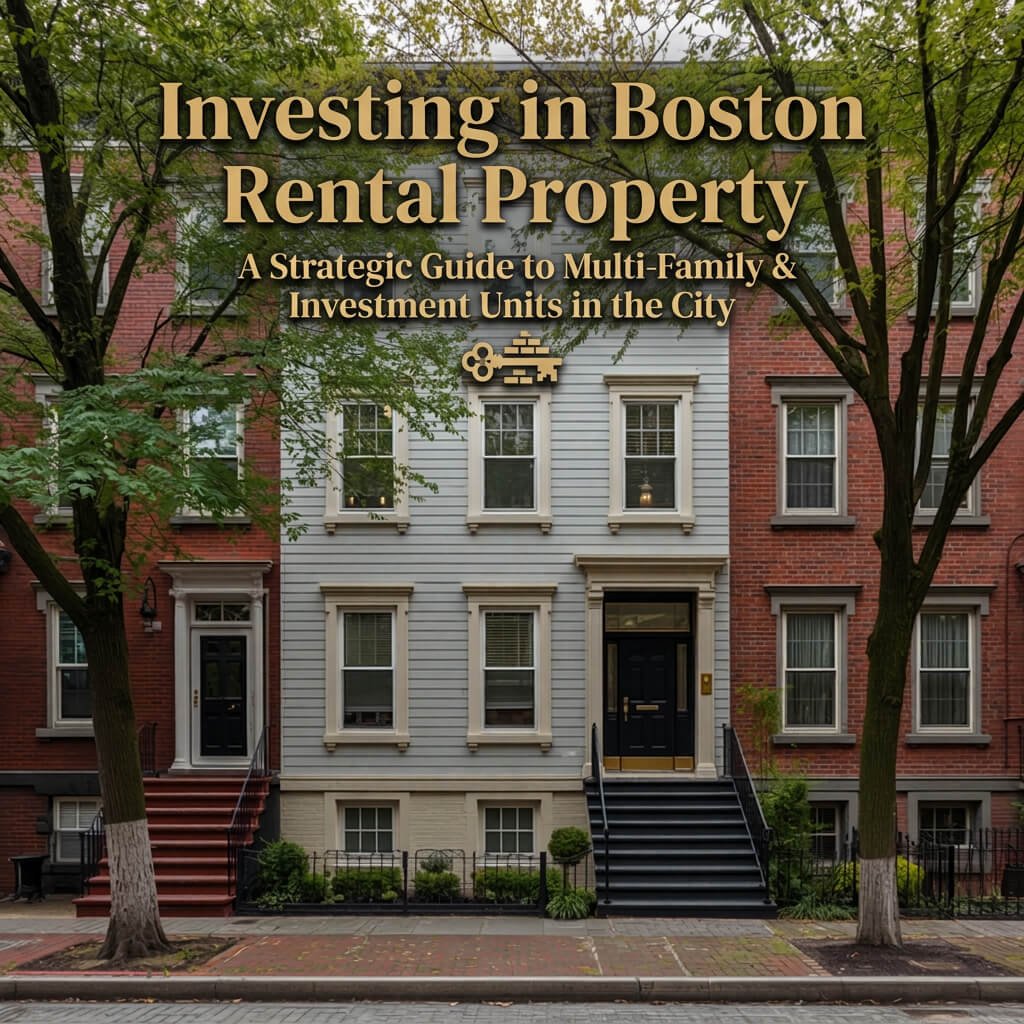
Investing in Boston Rental Property: A 2026 Guide for First-Time Landlords
Boston is one of the country's most stable real estate markets, but it's also one of the most expensive, which means investing in rental property here rewards patience and long-term thinking over chasing quick cash flow. Understanding how the numbers actually work, and which neighborhoods fit your investment goals, makes the difference between a deal that performs and one that just breaks even.
The most important metric for evaluating a rental property is the cap rate, or net operating income divided by the property's value. In Boston, cap rates for most stabilized properties currently run in the 4% to 6% range, with premium neighborhoods like Back Bay and the South End sitting toward the lower end and outer neighborhoods like Dorchester, Mattapan, and Hyde Park typically running higher. A lower cap rate isn't necessarily a bad thing in Boston, since it usually reflects a market where investors are willing to accept thinner current yield in exchange for strong long-term appreciation and low vacancy.
Because Boston trades at a premium, cash flow in the first few years is often modest to breakeven, particularly at today's mortgage rates, which are hovering in the low-to-mid 6% range. Most successful Boston investors build their return around a combination of rental income, gradual rent growth, debt paydown, and long-term appreciation, rather than expecting strong cash flow from day one.
Neighborhood selection matters just as much as the numbers. Dorchester and Mattapan tend to offer lower entry prices and strong tenant demand, which appeals to cash-flow-focused investors. South Boston and East Boston carry higher purchase prices but benefit from consistent appreciation and low vacancy. Allston and Brighton see strong rental demand driven by students and young professionals, though turnover tends to be higher. For first-time investors, owner-occupant financing through an FHA loan on a 2-to-4 unit property can be a powerful entry point, since it allows a lower down payment while rental income from the other units can often count toward loan qualification.
Before buying, it's worth running the full picture: purchase price, expected rent, property taxes, insurance, a maintenance reserve (often budgeted around 1% of the property's value per year), vacancy allowance, and property management costs if you won't be self-managing. Comparing that total against your expected income gives a far more accurate read than looking at the asking price and rent alone.
What First-Time Investors Should Know Before Buying in Boston
Follow these steps to evaluate a Boston rental property before you commit.
Conclusion
Boston rental property investing isn't about chasing the highest yield, it's about buying into a market with durable long-term demand, then underwriting the deal carefully so the numbers work for your specific goals and holding period. Working with a local real estate professional who understands neighborhood-level performance can help you separate a solid long-term investment from one that only looks good on paper.